
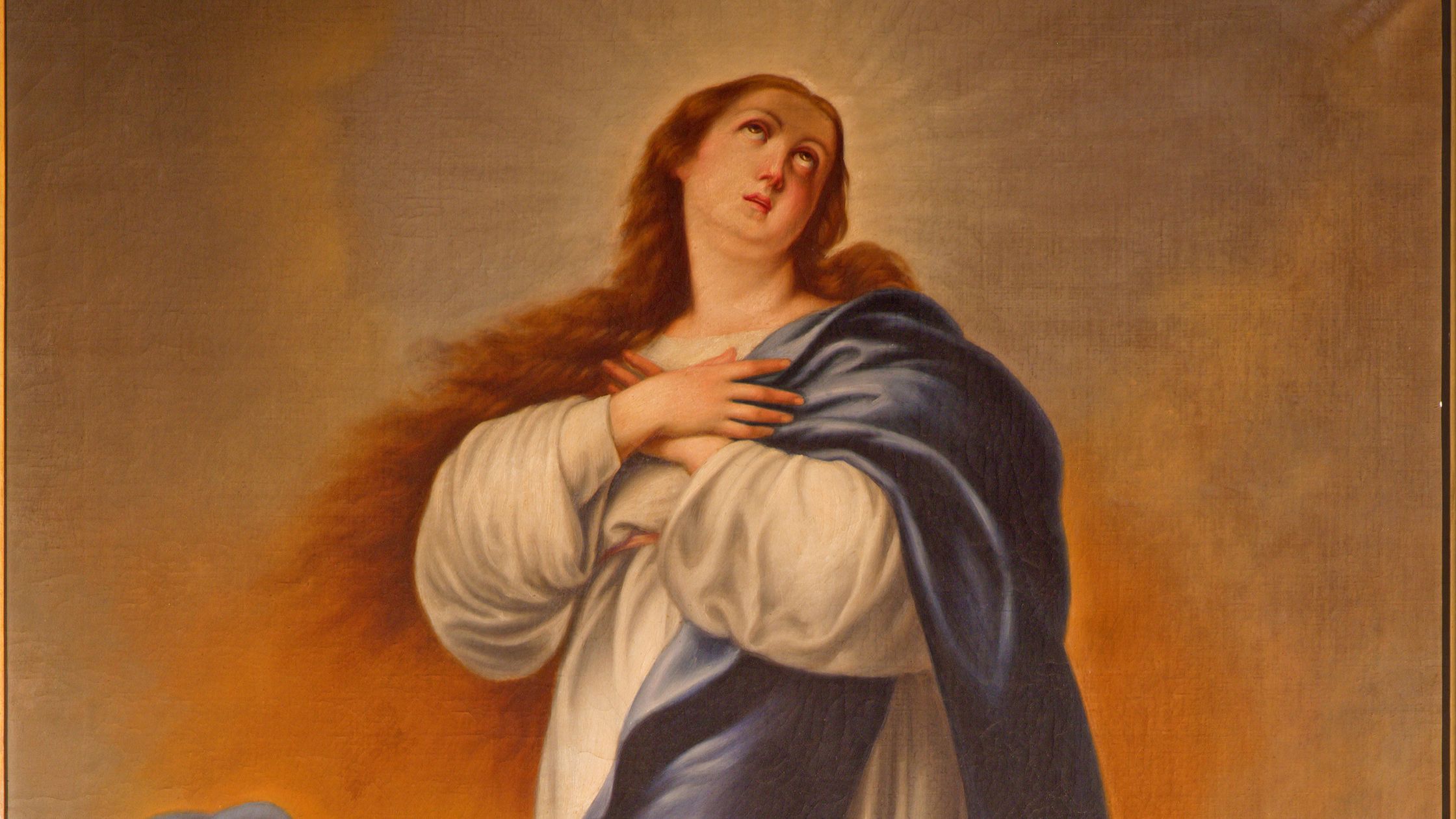
Immaculate Conception: Feast Origins and Global Shrines
12-19-2025
The Feast of the Immaculate Conception is observed by Catholics each year on December 8, exactly nine months before the celebration of the Nativity of Mary on September 8. As one of the most significant Marian feasts of the year, it will be celebrated with special Masses and devotions worldwide.
For Catholics, this day is typically observed as a Holy Day of Obligation, meaning the faithful are required to attend Mass on this day. In the United States, where Mary is the national patroness under the title of the Immaculate Conception, the obligation remains even if the date falls on a Monday or Saturday. This highlights how highly the feast is regarded: Catholics take time to honor Mary on this day in addition to their Sunday worship.
What is the Feast of the Immaculate Conception?
Despite a common misunderstanding, this feast does not refer to Jesus’s conception or the Virgin Birth. Instead, it celebrates the Catholic doctrine that Mary, from the very first moment of her own conception, was preserved by God’s grace from the stain of original sin. In other words, Mary’s soul was kept immaculate (completely pure) in preparation for her unique role as the Mother of Jesus.
This teaching has been part of the Christian tradition for centuries and was solemnly defined as dogma by Pope Pius IX in 1854, who proclaimed that “the most Blessed Virgin Mary, in the first instant of her conception... was preserved free from all stain of original sin.”
The feast, therefore, honors Mary’s own conception by her parents, St. Anne and St. Joachim, not the conception of Jesus, which is celebrated at the Annunciation on March 25.
Origin and History of the Feast
The roots of this celebration go back well over a millennium. The early Eastern Church was the first to commemorate Mary's conception. As early as the 5th to 7th centuries, Eastern Christians kept a Feast of the Conception of the Holy Mother of God, often focusing on St. Anne, Mary’s mother, on December 9. From the Byzantine East, devotion to Mary’s conception gradually spread to the West.
By the 8th century, the Latin Church had adopted a feast on December 8, which spread through southern Italy and eventually across Europe. Throughout the Middle Ages, the belief in Mary’s total sinlessness gained momentum, particularly among the Franciscans, despite ongoing theological debates about its feasibility.
In 1708, Pope Clement XI extended the feast to the entire Church and declared December 8 a holy day of obligation, thereby granting it the same solemn importance as other major feasts. Then, in 1854, Pope Pius IX issued the papal bull Ineffabilis Deus, formally defining the Immaculate Conception as Catholic dogma. The declaration was met with great joy throughout the Catholic world.
Just four years later, in 1858, apparitions of Mary at Lourdes would famously echo the dogma when Mary spoke the words “I am the Immaculate Conception” to St. Bernadette. Today, the Feast of the Immaculate Conception remains a beloved part of the Church’s Advent season, celebrated with processions, hymns, and, in some countries, even public holidays.
Churches Dedicated to the Immaculate Conception
While the Immaculate Conception is a theological marvel, it has also inspired magnificent sacred architecture and devotions around the world. In honor of Mary under this title, Catholic communities on every continent have built beautiful churches, basilicas, and cathedrals. Visiting these sites is like taking a virtual pilgrimage in Mary's footsteps. Each shrine reflects a local culture's love for the Mother of God, often choosing her Immaculate Conception as their patroness and protector.
Basilica of the National Shrine of the Immaculate Conception (Washington, D.C.)
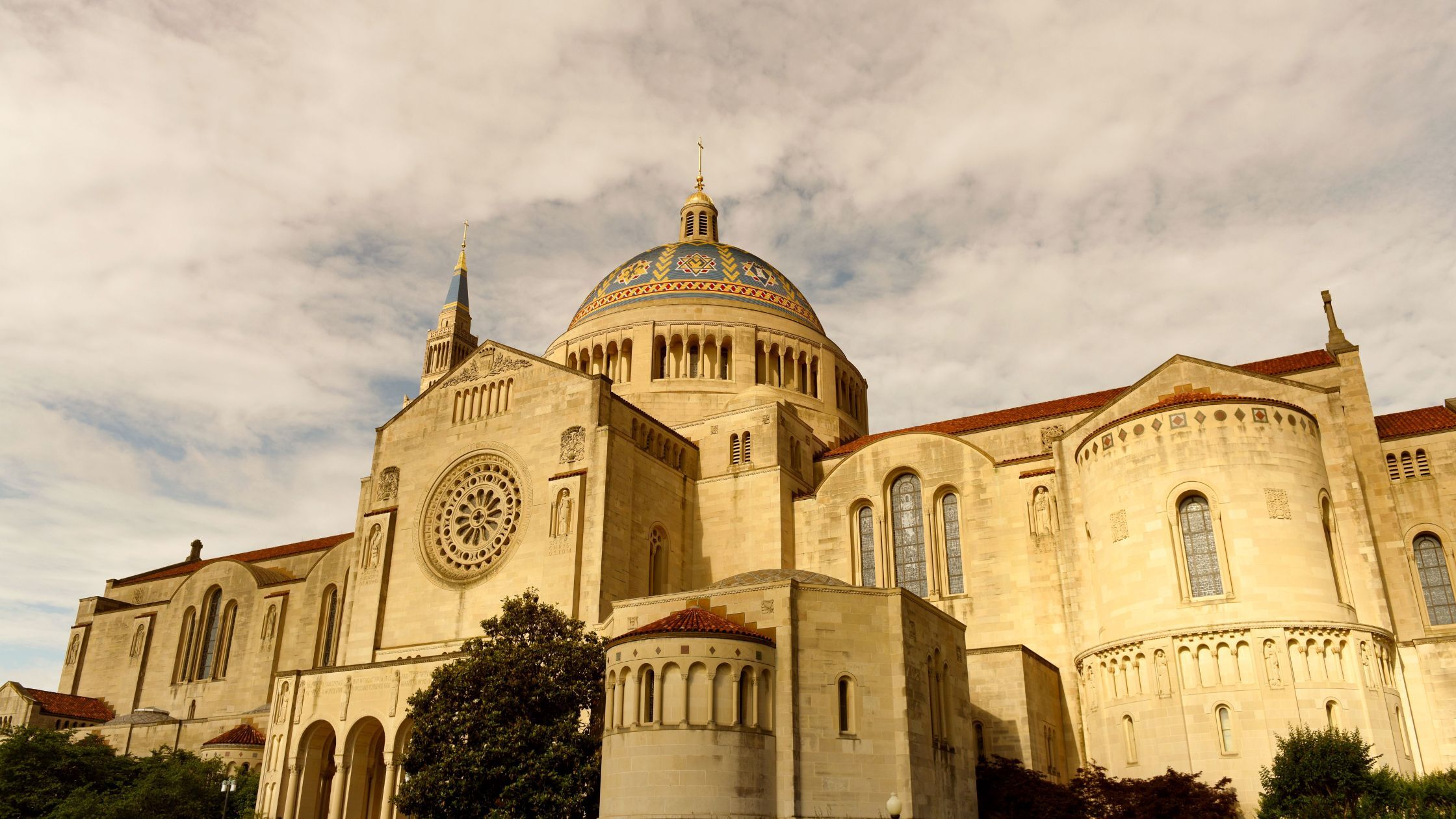
The Basilica of the National Shrine of the Immaculate Conception in Washington, D.C., is a truly monumental tribute to the Virgin Mary. It holds the distinction of being the largest Catholic church building in North America, a sprawling minor basilica whose dome and bell tower dominate the skyline of the Catholic University campus.
The shrine was envisioned in the early 20th century as "America's Catholic Church," dedicated to Mary under the title of the Immaculate Conception, who was declared Patroness of the United States in 1847. The foundation stone was laid in 1920, and the basilica's crypt church opened in 1926, with the massive Upper Church completed in 1959. The final architectural touches, including the mosaic decoration of the Trinity Dome, were completed on December 8, 2017.
Stepping inside this shrine, visitors encounter a tapestry of American Catholic heritage. The architecture is a bold Neo-Byzantine/Neo-Romanesque style, clad in pale stone and adorned with soaring domes and intricate mosaics. There are over 80 chapels and oratories inside, many sponsored by different ethnic communities to portray Mary as she is loved around the world. You can find the Virgin of Guadalupe, Our Lady of Czestochowa, Our Lady of Lourdes, and dozens more, all surrounding the central mosaic of Christ in Majesty and, above the altar, a massive mosaic of Mary as the Immaculate Conception.
This layout truly makes the basilica "Mary's Shrine," a national gathering place for prayer. Over the years, it has hosted several popes, including Saint John Paul II and Pope Francis. The basilica's size, beauty, and dedication to the Immaculate Conception all reflect the U.S. Catholic Church's deep appreciation for Mary's patronage. Every December 8, the shrine hosts a special Mass, often with bishops and crowds honoring the patroness.
The Blue-Domed Churches of Santorini (Greece)
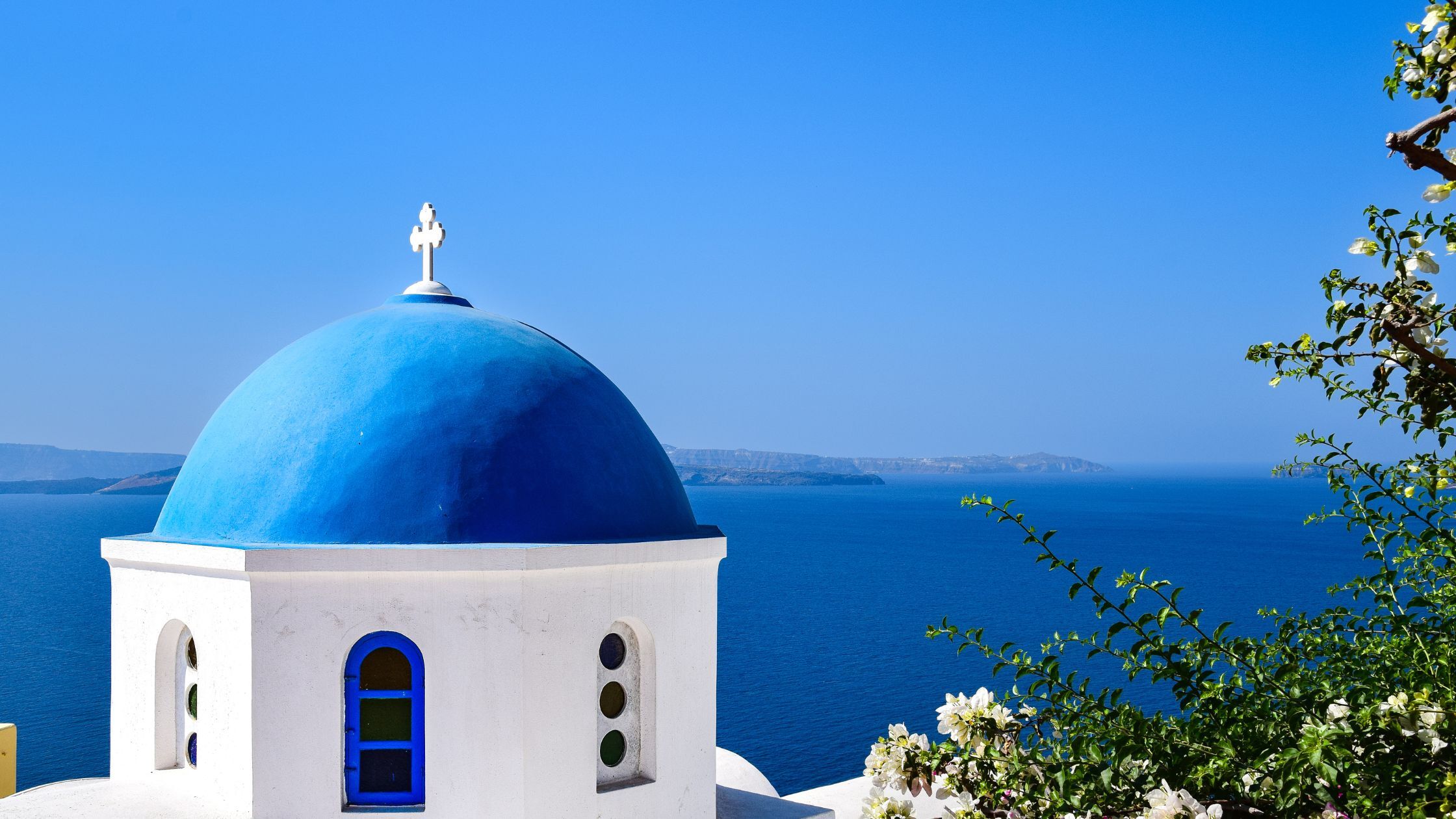
From the grandeur of Washington, our pilgrimage takes a very different turn to the sun-drenched cliffs of Santorini, Greece. The connection to the Immaculate Conception here is more cultural than doctrinal, since the Eastern Orthodox Church, predominant in Greece, does not hold the same dogma. Yet, Santorini's blue-domed churches have become an international symbol of Marian devotion in their own right.
Countless postcards and travel photos feature those brilliant cobalt-blue domes and white bell towers set against the sparkling waters of the Aegean Sea. Many of these charming Greek island churches are dedicated to the Virgin Mary, whom the locals call "Panagia" (meaning "All-Holy").
In the clifftop village of Oia, the most photographed domes belong to the Church of Panagia Platsani, a historic church in the main square. According to local legend, villagers built Panagia Platsani after a miraculous icon of the Virgin was found floating in the sea and mysteriously moved itself from a smaller chapel back to the castle ruins, a sign that Mary wanted her church to be built on that spot. Today, the whitewashed church with its blue dome stands as a beloved landmark, overlooking the sea "where her spirit can bless all vessels," as one local story poetically says.
Santorini's skyline is dotted with many such Marian chapels and churches, each often honoring an aspect of Mary: her dormition (Assumption), her protection, or one of her icons. The Cycladic architecture itself, with pure white walls (symbolizing purity) and sky-blue domes, seems to echo Mary's colors. Mary is often depicted in art wearing a blue mantle, and in a way, the entire island feels like it's under Mary's blue mantle.
Travelers who wander the narrow lanes of Santorini will frequently stumble upon little shrines with Mary's icon inside, or see strings of Greek flags and banners flying on Marian feast days. August 15 (the Dormition of Mary in Orthodoxy) is a huge celebration here. Whether one is Catholic or Orthodox, the beauty and serenity of Santorini's Marian churches inspire prayer.
La Capilla de la Concepción "La Conchita" (Mexico City)
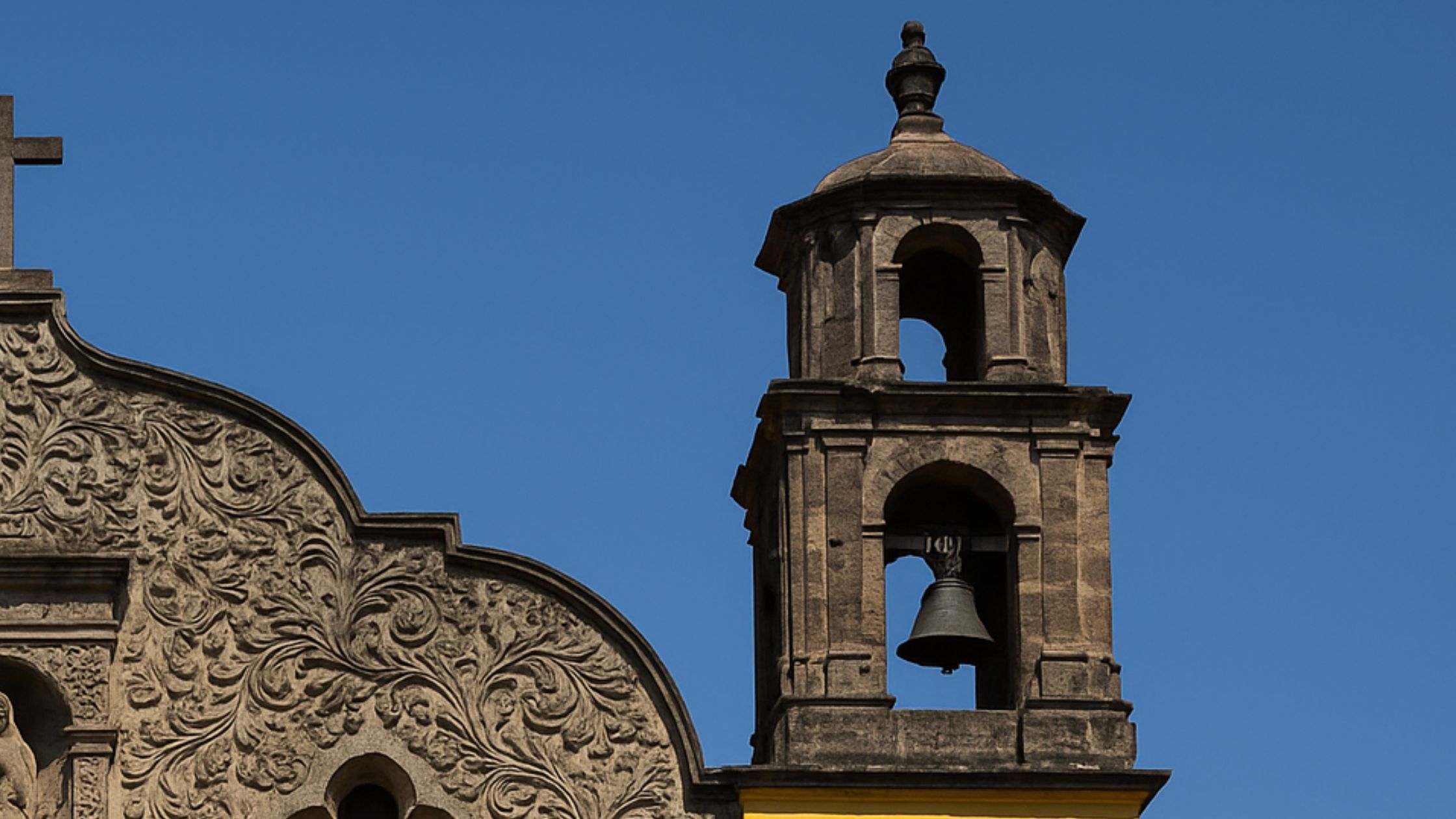
In the heart of modern Mexico City, one can find a modest yet extraordinary little chapel called La Capilla de la Concepción (Chapel of the Immaculate Conception), affectionately nicknamed "La Conchita." This unassuming chapel holds the honor of being one of the oldest Christian churches in the Western Hemisphere, dating all the way back to 1525. In fact, it is almost certainly the oldest church in Mexico still in continuous use.
Hernán Cortés and the first Spanish missionaries built this chapel in the Coyoacán area of what was then the newly conquered Tenochtitlán, dedicating it to La Inmaculada Concepción. The Spanish had a deep devotion to the Immaculate Conception (the title "La Purísima" was especially championed by Franciscan friars in Spain and the colonies), so it's no surprise that one of their very first acts was to erect a shrine in her honor.
La Conchita was even built atop the remains of a pre-Hispanic temple platform, symbolizing a new era of faith on the foundations of the old. Over nearly five centuries, this tiny chapel has witnessed the unfolding of Mexican history around it: the colonial period, independence, wars, reforms, and revolutions. It survived damages and restorations (including use as a library at one point) but still stands as a peaceful oasis of prayer amid the bustling city.
Its simple Baroque façade of red volcanic stone and its quaint bell gable might not be as famous as larger cathedrals, but locals cherish La Conchita. Stepping inside, one finds an image of the Virgin Mary at the altar and can sense generations of devotion soaked into the adobe walls. The chapel's endurance is almost miraculous in itself. It's humbling to kneel where both Aztec converts and Spanish settlers once prayed to Our Lady.
Manila Cathedral (Philippines)
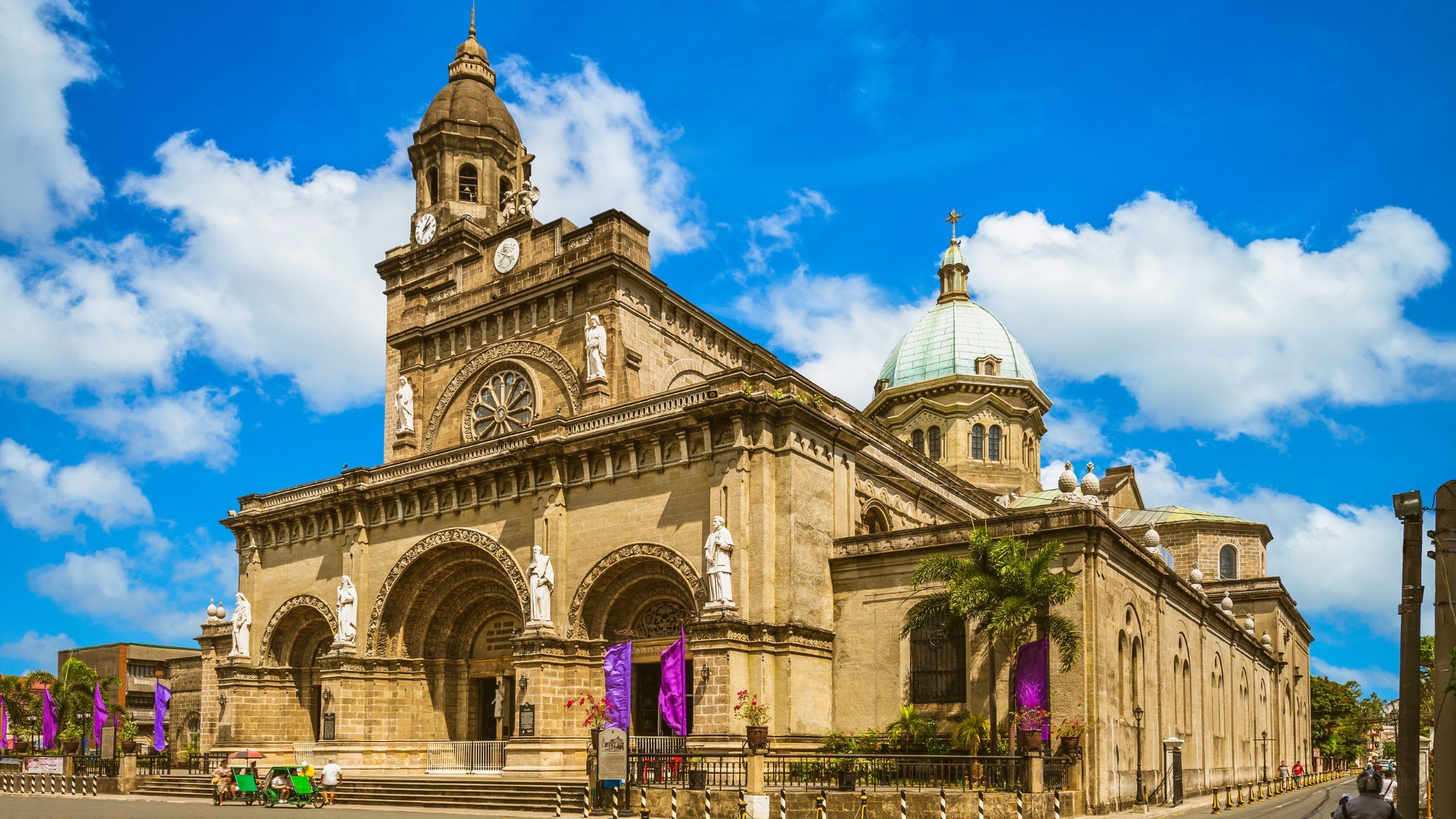
Halfway around the world, another great Marian church anchors the faith of a nation. The Manila Cathedral, officially the Minor Basilica and Metropolitan Cathedral of the Immaculate Conception, stands in Intramuros, the historic old city of Manila. It is the premier church in the Philippines, often referred to as the country's "Mother Church."
Like La Conchita, the Manila Cathedral's story begins with Spain's 16th-century voyages. Spanish missionaries brought devotion to Mary Immaculate to the Philippines, and in 1571, they founded the first parish in Manila. By 1581, that church became a cathedral and, significantly, from the very start, it was placed under the patronage of the Immaculate Conception. This was no coincidence: the Spanish Empire considered the Immaculate Conception as a special patroness of its overseas territories. Later on, the Immaculate Conception was declared the principal patroness of the entire Philippines.
Over the centuries, Manila Cathedral has been destroyed and rebuilt multiple times (at least eight times) due to fires, earthquakes, and war. The current structure, with its striking Romanesque Revival façade and large rose window, was completed in 1958. It was re-dedicated on December 10, 1958, just two days after the Feast of the Immaculate Conception, as if to reinforce the Marian patronage.
Inside, a splendid bronze statue of the Immaculate Conception presides over the altar, and on Marian feast days it is decorated with a grand halo and flowers. Filipino Catholics have a very strong love for Mary, and it shows in how they celebrate this cathedral's feast day: every December 8, the Manila Cathedral hosts a Patronal Feast Mass and often a procession.
Visiting Manila Cathedral, one can sense Mary's maternal care embraced by the people. From the images of Our Lady found in every niche, to the side chapel where people light candles before an icon of Our Lady of Guidance, the cathedral is a living center of Marian devotion. It's also a symbol of resilience: much like Mary's own heart that was pierced but never lost faith, this cathedral has been reduced to ruins (most recently in World War II), yet always rises again. This is a metaphor Filipinos often draw for their nation's spirit, with Mary accompanying them through trials.
Mary's Universal Presence
These are just a few stops on our Marian pilgrimage. Around the world, countless churches are dedicated to the Immaculate Conception, from the Cathedral of the Immaculate Conception in Moscow, serving Russia’s Latin-rite Catholics, to the Cathedral of Brasília in Brazil, consecrated to Mary under this title; from small village chapels in Ireland to grand basilicas in Spain named La Purísima Concepción. Each bears its own story of faith, art, and sometimes miracles. What unites them all is Mary, the Immaculate Mother, who gathers people around her Son and leads hearts to God through her purity, faith, and maternal love.
Bringing the Pilgrimage Home
You might be feeling inspired by these holy sites and wondering, "How can I experience a piece of that beauty and devotion if I can't travel there?" The wonderful truth is that you can honor Mary right in your own home, your own "domestic church." Something as simple as displaying a statue of the Blessed Mother or hanging a picture of Mary Immaculate can make your home a little sanctuary of her presence. Consider creating a Marian prayer corner where your family can gather, or place a Mary statue in your garden, echoing the tradition of many villages that place a Madonna statue in a central square.
Quality religious art makes a difference in your prayer life. A beautiful statue or framed image becomes more than decoration; it's a constant reminder of Mary's guidance and protection. Whether you're creating your first home shrine or adding to a cherished prayer space, St. Patrick's Guild is here to help. Family-owned since 1949, we’ve spent more than 75 years helping Catholic families find quality devotional items that nurture faith and enrich daily prayer. Explore our collections of Blessed Mary Statues, Blessed Mary Pictures, and our complete Mary collection to find the perfect pieces for your home.
O Mary, conceived without sin, pray for us who have recourse to thee!