
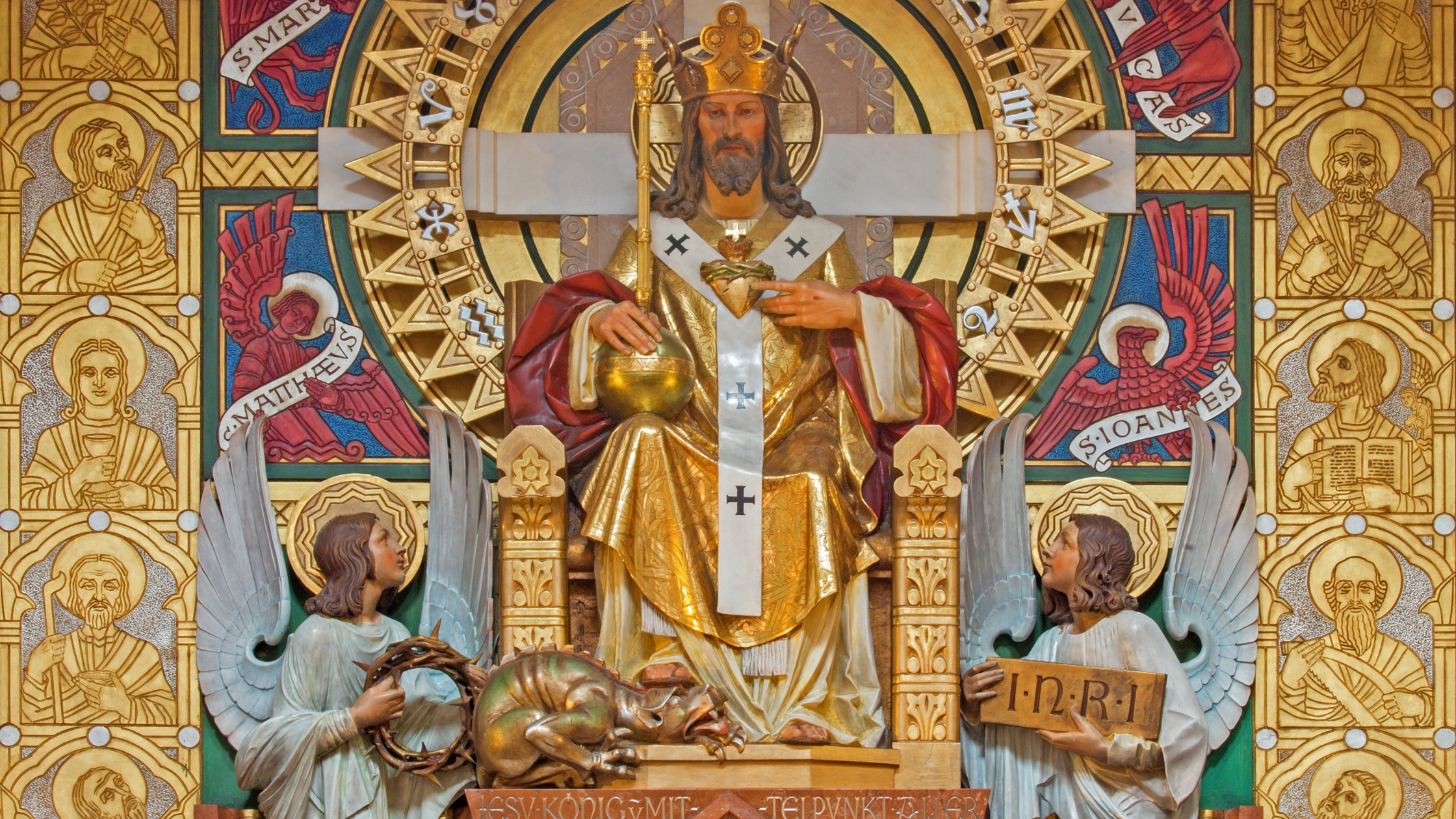
Feast of Christ the King: History and Significance
12-19-2025
Every year, as the liturgical calendar draws to a close, Christians around the world celebrate the Feast of Christ the King. Officially known in the Catholic Church as the Solemnity of Our Lord Jesus Christ, King of the Universe, this feast emphasizes that Jesus Christ reigns as King over all creation. Established relatively recently in Church history, the feast has grown in importance and is observed by numerous Christian denominations, including Roman Catholics, Lutherans, Anglicans, Methodists, and others. In this article, we will explore the history, meaning, and celebration of this significant feast, as well as practical ways to honor Christ the King in your own life.
What Is the Feast of Christ the King?
The Solemnity of Our Lord Jesus Christ, King of the Universe, is a liturgical feast that honors Jesus Christ as the supreme king and ruler of the universe. Unlike earthly kings who wield temporal power, Christ's kingship is spiritual and universal, transcending national borders and political systems.
The feast celebrates Jesus as King of Kings in a realm that encompasses all of creation. The title "King of the Universe" (in Latin, Universorum Rex) emphasizes that Christ's sovereignty extends over every nation, every aspect of life, and the entire cosmos. This is not merely a metaphorical kingship but a recognition that Jesus holds ultimate authority over all things.
The feast is ranked as a solemnity, meaning it is among the most important celebrations in the Church calendar. It serves as the grand finale of the liturgical year, pointing believers toward the end of time when Christ's reign will be fully manifest over all creation.
History and Origin of the Feast of Christ the King
Pope Pius XI established the Feast of Christ the King in 1925 through his encyclical Quas Primas. The historical context is crucial to understanding its purpose.
In the aftermath of World War I, Europe was experiencing tremendous upheaval. Monarchies had fallen, secularism was rising, and many societies were increasingly excluding faith from public life. Pope Pius XI observed that people were thrusting "Jesus Christ and his law out of their lives," both privately and politically. He believed that acknowledging Christ's kingship was the antidote to rampant nationalism, secularization, and conflict.
The Pope wrote: "Oh, what happiness would be Ours if all men, individuals, families, and nations would but let themselves be governed by Christ!" He instituted this feast to reassert the ultimate authority of Christ as a remedy for societal ills, believing that true peace could only reign when individuals and nations submit to the "rule of our Savior" in the Kingdom of Christ.
The feast was first celebrated in 1926. Initially, Pope Pius XI set its date as the last Sunday of October, symbolically placed before the Feast of All Saints on November 1 to indicate that Christ is King of all the saints as well as all earthly powers.
The Move to November
After the Second Vatican Council, Pope St. Paul VI issued a formal decree (Mysterii Paschalis) in 1969 that made two significant changes. First, he moved the feast to the final Sunday of the liturgical year (the last Sunday of Ordinary Time, usually in late November). Second, he elevated it to the highest rank of solemnity and expanded its title to "Our Lord Jesus Christ, King of the Universe."
The theological rationale for this new placement was profound. By positioning the feast at the very end of the Church year, the Church highlights the eschatological significance of Christ's kingship. As the liturgical year concludes looking toward the Second Coming of Christ, we proclaim that Jesus is the Alpha and Omega, the beginning and the end, the Lord of all history.
Ecumenical Celebration
Since its institution, the Feast of Christ the King has been adopted by various Christian communities. Many Protestant denominations celebrate it as Christ the King Sunday or Reign of Christ Sunday on the same day as Catholics. It appears in Anglican and Lutheran calendars and even in some Methodist and Presbyterian traditions, underscoring a shared belief in Christ's sovereign lordship.
When Is the Feast of Christ the King?
The Feast of Christ the King is a movable feast observed on the final Sunday of the Church’s liturgical year, immediately before the First Sunday of Advent. In the Roman Catholic calendar, it marks the 34th Sunday of Ordinary Time and brings the liturgical year to a close.
Depending on the year, the feast typically falls between November 20 and November 26. In the older liturgical calendar, the 1962 Missal or Extraordinary Form, Christ the King is traditionally celebrated on the last Sunday of October, which some communities continue to observe. However, the majority of Catholics and many Protestant denominations celebrate the feast on the final Sunday before Advent.
Liturgical Celebration
The Mass for Christ the King is typically solemn and festive in nature. The liturgical color is white or sometimes gold, symbolizing victory, joy, and Christ's royalty.
The Scripture readings center on Christ's eternal kingship. The Gospel often recounts Jesus' words to Pontius Pilate, "My kingdom is not of this world" (John 18:36), and passages depicting Christ's glorious return and judgment (such as Matthew 25:31-46). These readings remind the faithful that while Christ's kingdom is present in mystery now, it will come in fullness at the end of time.
The Meaning of Christ's Kingship
Understanding what it means to call Jesus "King" is essential to celebrating this feast authentically.
A Kingdom Unlike Any Other
Christ's kingship is fundamentally different from worldly rule. While earthly kings may govern through force, wealth, or political power, Christ's kingship is one of humility, service, and love. Jesus entered Jerusalem not on a warhorse but riding a donkey, as a peaceful king. He wore a crown not of gold, but of thorns at His crucifixion. His throne was the Cross, and by His sacrificial death and resurrection, He conquered sin and death.
In the Preface of the Mass for this solemnity, the Church beautifully describes Christ's kingdom as "a kingdom of truth and life, a kingdom of holiness and grace, a kingdom of justice, love, and peace." These markers of Jesus' reign serve as a blueprint for how Christians are meant to live out their faith.
Christ's Reign Begins in the Heart
Recognizing Christ as King has practical implications for daily life. It means striving to follow His commandments and the Gospel even when society's values conflict with our faith. It means cultivating virtues like justice, charity, and peace. When we call Christ "King," we affirm that we owe Him our fidelity above all else.
The feast prompts believers to ask themselves: "Is Christ truly the king of my life? Do I allow His teachings and His love to reign in my heart, my family, my decisions?" This reflection can be deeply personal and transformative.
An Eschatological Vision
By placing this feast at the end of the liturgical year, the Church reminds us of the final culmination of history: one day Christ will return in glory as King and Judge of all. This eschatological perspective offers hope and anticipation, reassuring us that, no matter how chaotic or dark the world may become, Christ will ultimately triumph, and His Kingdom of goodness will fully prevail.
Kingship Through Service
Jesus said, "Whoever would be first among you must be the servant of all" (Mark 10:44). His kingship was displayed by washing feet, forgiving sinners, healing the sick, and laying down His life. We honor Christ as our King best when we strive to serve others in love, thereby bringing a bit of His kingdom into our corner of the world.
How to Celebrate: Prayers and Devotions
The Church offers rich prayers and devotions to help the faithful honor Christ's kingship on this feast day.
The Act of Dedication
One of the most well-known prayers is the Act of Dedication of the Human Race to Jesus Christ King. Pope Pius XI asked that this act of consecration be prayed publicly on the feast day, and many parishes still recite it on Christ the King Sunday, often after Mass or during Benediction.
The prayer begins: "Most sweet Jesus, Redeemer of the human race, look down upon us humbly prostrate before You..." and acknowledges Christ's authority over all people. Traditionally, a plenary indulgence was granted to those who recited it on this feast under the usual conditions.
Music and Hymns
A well-known hymn for this day is "To Jesus Christ Our Sovereign King," with the triumphant refrain: "Christ Jesus, Victor! Christ Jesus, Ruler! Christ Jesus, Lord and Redeemer!" Many hymns on this day feature regal themes, using words like "crown Him," "reign," and "majesty." The traditional Latin hymn "Christus Vincit" (meaning "Christ conquers") is also sung on this occasion.
Scripture and Meditation
Scripture provides profound passages about Christ's kingship for reflection:
- "King of kings and Lord of lords" (Revelation 19:16)
- Jesus' words to Pilate: "My kingdom does not belong to this world" (John 18:36)
- St. Paul's teaching that Christ will hand over the Kingdom to God the Father, so that "God may be all in all" (1 Corinthians 15:24-28)
During personal prayer or family gatherings, it can be meaningful to read and meditate on these passages or discuss what Christ's reign means in daily life.
Special Devotions
Many faithful also pray the Litany of Christ the King on this occasion. In some places, a eucharistic procession or Benediction of the Blessed Sacrament is held on Christ the King Sunday, underscoring that the Eucharist is the sacramental presence of our King dwelling with us.
A Simple Personal Prayer
You might also offer a simple personal prayer acknowledging Jesus' lordship: "Jesus, You are my King; I surrender my life to You." The official Collect prayer of the feast beautifully summarizes our plea: "Almighty ever-living God, whose will is to restore all things in Your beloved Son, the King of the universe, grant, we pray, that the whole creation, set free from slavery, may render Your majesty service and ceaselessly proclaim Your praise…"
Honoring Christ the King with St. Patrick's Guild
The Feast of Christ the King is an opportunity to bring tangible reminders of Christ's kingship into your home and community. Since 1949, St. Patrick's Guild has been serving the Catholic faithful as a family-owned store specializing in religious goods. With over 75 years of experience, we understand how quality devotional items can support and enrich your spiritual life. We're committed to helping individuals and families celebrate Christ's reign in meaningful ways.
Bring the presence of our King into your home with sacred images and symbols. Our collection ofJesus Christ pictures offers reverent images of our Lord that serve as daily reminders of His loving sovereignty. Many Catholics display an image of Christ the King or the Sacred Heart as a sign that "Christ is the head of this household." OurLast Supper pictures capture the moment when the King of the Universe humbled Himself in the Eucharist, perfect for sparking reflection during family prayer. Most powerfully, our crucifixes and crosses remind us that it was on the Cross that Jesus was enthroned as King in self-giving love.
The Feast of Christ the King is a day to unite in proclaiming that Jesus Christ is Lord, not only with our voices at Mass but with our actions and choices every day. In honoring Christ as our King, we find true freedom and peace under His loving reign. May this solemnity inspire us to live as faithful subjects of Christ the King, and may our homes and communities reflect the justice, love, and peace of His Kingdom, now and forever.
Vivat Christus Rex! (Long live Christ the King!)